⚡ Exclusive Launch Offer – Grab Yours Now !!

How Human Emotions Control 90% of Our Decisions
Most people believe they make decisions logically, but psychology and neuroscience reveal a deeper truth: emotions drive the majority of human choices. This article explores how feelings silently influence our decisions, why logic often comes later, and how emotional awareness can transform the way we live, work, and connect with others.
1/16/20261 min read
Introduction: The Invisible Hand Behind Every Choice
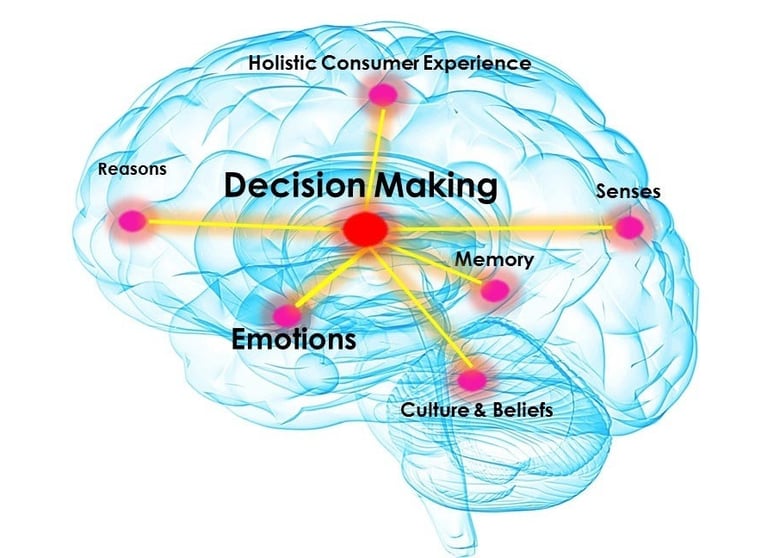
We like to think of ourselves as rational beings. We analyze options, compare outcomes, and weigh pros and cons. Yet, research consistently shows that emotion plays the leading role in nearly every decision we make—from what we buy and who we trust, to the paths we choose in life.
Logic doesn’t disappear, but it usually enters the process after emotions have already decided the direction. Understanding this doesn’t make you weaker; it makes you more aware—and awareness is power.
1. The Two Systems That Shape Human Decisions
Psychologists describe decision-making as operating through two internal systems:
Emotional Thinking (Fast System)
Automatic and instinctive
Requires little effort
Driven by feelings, impulses, and intuition
Rational Thinking (Slow System)
Conscious and deliberate
Analytical and effortful
Used for evaluation and justification
Research popularized by Daniel Kahneman in his book Thinking, Fast and Slow shows that the fast, emotional system dominates most of our daily choices. The rational system often steps in later—to explain why the decision “made sense.”
In simple terms:
We feel → we decide → we explain.
2. Why Emotions Act Faster Than Logic
Emotion evolved long before reasoning. Early humans survived by reacting quickly to danger and opportunity, not by analyzing data.
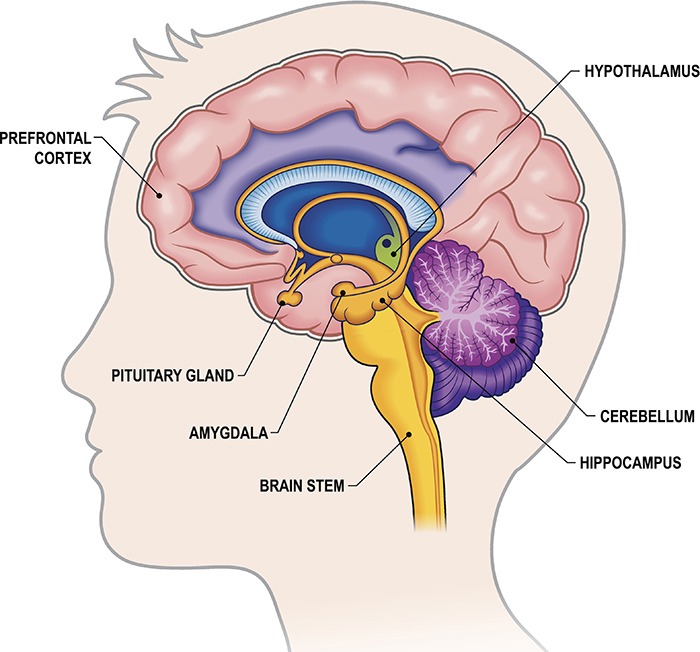
Key brain structures involved include:
The amygdala, which detects threat and reward instantly
The limbic system, which assigns emotional meaning
The prefrontal cortex, responsible for logic, planning, and reasoning
Because the emotional brain is faster and consumes less energy, it often takes control—especially under pressure, uncertainty, or time constraints.
Emotion isn’t a flaw in human design.
It is an efficiency mechanism.